

Toast Crumbs
A short essay about a missing piece of toast and how reality gets negotiated.

One day, I put bread in the toaster, clicked the lever down, saw the tiny red filaments inside the toaster light up. I waited.
It happened a few years ago, at a time in my life when everything I had chosen seemed, in retrospect, like a series of bad decisions.
Given how many mistakes I had made, it is likely I didn’t notice for a while that the toast did not appear.
When I did notice, the toaster was turned off, as it does after the two or three minutes it takes to brown the bread.
But there was no toast in the toaster.
Could it have fallen through the cracks? I peered inside. Not seeing it, I unplugged the toaster, opened the bottom, and shook it. The countertop rained toast crumbs. Where was the toast? I shook it again.
It was nowhere.
The toast had disappeared.
Now when I tell most people this, they think there’s a logical explanation. Maybe I thought I put the bread in the toaster. In any case, it couldn’t truly have disappeared. It was just someplace I wasn’t looking.
But I was pretty sure I saw the red lights, and there was only one piece of bread left.
I remember because I thought, Oh well, I’ll just toast another piece.
Here’s my theory.
The toast slipped into another vibrational reality. A parallel reality, of which there are more than we can comprehend, each one born with every decision: to go right versus left, to turn your head this way, not that. To stay or leave the person you thought was the love of your life. One reality for if you stuck it out. Another for waking up, a third for avoiding the possibility altogether.
Toast exists in every one of these realities, though in only a dozen, I imagine, was I actually in that kitchen, in that house, pulling the toast from that toaster.
Humor me, if you will. Where does toast that slips through the space-time continuum known as agreed-upon reality go, if it were particularly willful and looking for escape?
What was different about this piece of toast, that it was able to cancel reality and choose another situation altogether?
In one New Age theory, we choose our families, and the people in our lives are there because we have a soul contract to work out our issues.
Could it be the same for the objects in our environment? That they agreed to be the background and furniture and sets for the drama unfolding, because they got something from being a player, even if an inanimate one.
No one I’ve yet told can provide a better explanation, or a more logical one.
Now that I think of it, there’s another possibility.
I lived with my landlord, sharing a kitchen. She was anxious and particular, and over the course of our living together, my cleaning standards versus hers became a point of contention.
I came downstairs one morning and found toast crumbs all over the kitchen counter. That morning I had used the toaster, but in my effort to avoid another unpleasant conversation, I had taken pains to wipe the counter no fewer than three times, to empty the crumbs out of the bottom of the toaster, and to wash the sink so that there was not one speck of a toast crumb to be found.
And still, she seemed to find toast crumbs everywhere.
Take a photo next time you see them, please, I begged, mystified. I could not understand why her account of the kitchen counter and mine were not just different but wildly at odds.
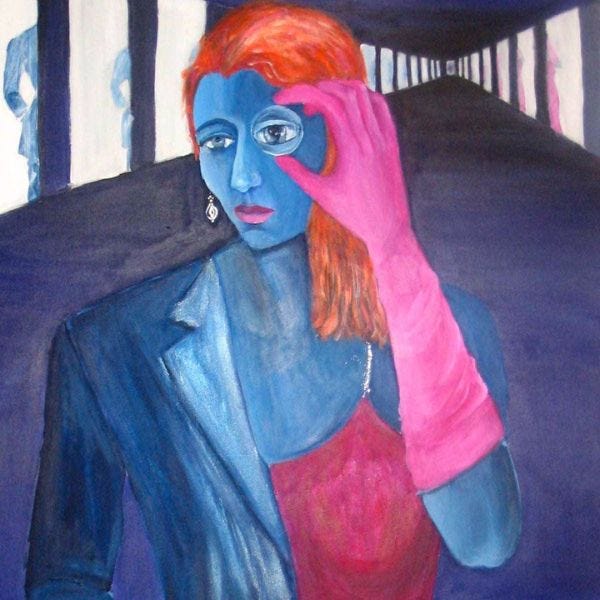
We ended up going to formal mediation over toast crumbs.
I kid you not.
And it was only after I got out of that house and her clutches that I saw it more clearly. There were never any toast crumbs. But insisting that there were gave her anxiety a focus, and the more we debated the toast crumbs, the more real they became.
She lived for drama, and if there was not drama to be had, she would surely find it.
So my other theory is that perhaps the toast went the way of the imaginary crumbs, and it was a kind way, on the part of the universe, of cluing me in to the fact that what’s real depends very much on what people need to believe.